

[News Space=Reporter seungwon lee] Lotte Duty Free and Hyundai Duty Free were selected as new operators for Incheon International Airport Duty Free Shops DF1 and DF2, after Shilla Duty Free and Shinsegae Duty Free returned their business licenses.
Incheon International Airport Corporation announced on the 30th that it had selected multiple candidates for the Terminal 1 and 2 duty-free shops DF1 and DF2 based on the evaluation of business proposals submitted by Lotte Duty Free and Hyundai Duty Free and the results of the bid price opening, and notified the Korea Customs Service.
Incheon Airport DF1 and DF2: Lotte's return, Hyundai's expansion
Lotte and Hyundai each won one duty-free zone in the bidding for Incheon International Airport's Terminal 1 DF1 and DF2, marking the first major restructuring since the pandemic. Lotte regained DF1 (perfume and cosmetics) three years after losing the bid in 2022, while Hyundai secured DF2 (alcohol and tobacco), aiming to expand into profitable categories within the airport duty-free market.
The rental rate remained at "per-passenger rent," and the minimum occupancy rate was reduced by 5.9% for DF1 and 11.1% for DF2 compared to 2023, resulting in the current price. The key point is that, rather than a fixed high-rent structure based on minimum guaranteed revenue (MG) as in the past, the structure is linked to passenger numbers, making passenger recovery a variable that aligns with the interests of both airports and operators.
Changes after the withdrawal of Silla and Shinsegae
Shilla and Shinsegae demanded a 40% rent reduction, citing sluggish sales and deficits. However, Incheon International Airport Corporation refused to accept the court's mediation proposal (estimated at a 25-27% reduction), ultimately leading to both operators relinquishing their concessions. The airport subsequently opened a new bid with a lower minimum per-passenger price, sending a signal to the market: "Don't be as reckless as you were in the past."
The fact that Lotte and Hyundai only exceeded the minimum standard by 6-8% this time can be interpreted as evidence that both airports and operators have now shifted to a "profit-centered game."
The End of the Overheated Competition in Duty Free Shops
In the past, Incheon Airport's duty-free bidding was a battle of pride over the title of "world's number one in sales." However, this time, only two companies participated, and the bids were conservative. This demonstrates that the domestic duty-free industry has shifted to prioritizing "profit over market share."
Lotte's Recovery Strategy vs. Hyundai's Choice and Focus
As the world's leading duty-free operator, Lotte has recaptured the symbolic core area of Incheon Airport (perfume and cosmetics), making a bold move to re-establish its brand power and supply chain within the airport channel. Hyundai has taken over DF2, which focuses on high-margin liquor and tobacco products rather than volume, thereby focusing on expanding its "small but valuable portfolio."
Passenger and airline network recovery is a game changer
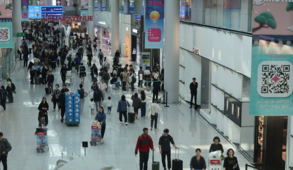
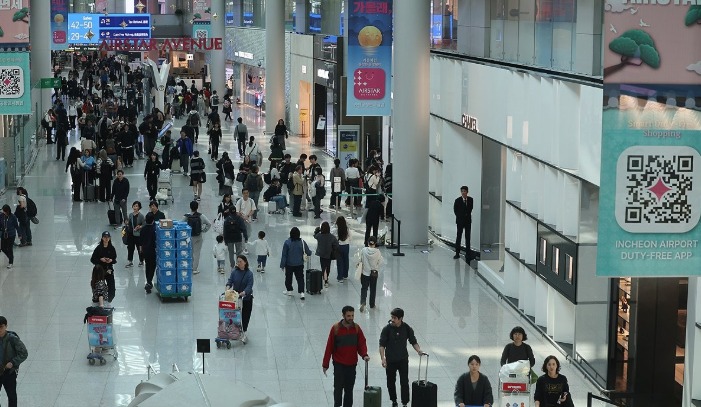
Incheon Airport's passenger traffic reached a record high of 74,071,475 in 2025, and the number of airlines serving the airport reached triple digits for the first time since its opening, reaching 101. Because passenger and network expansion directly translates into a broader revenue base through the per-passenger rental structure, this presents a favorable environment for Lotte and Hyundai, which have chosen "long-term pricing over high-use pricing" in the mid- to long-term.
However, if variables such as slowing demand in China and Japan, exchange rates, and a decline in consumption overlap, there is a risk that profitability will falter again due to stagnant spending per customer, so this should be viewed as a risk scenario.
Experts in the distribution industry and duty-free shops analyzed, "This Incheon Airport DF1·DF2 bidding is the first case where the pandemic-era conflict, which was represented by 'maximizing airport profits vs. worsening duty-free shop profitability,' has been readjusted to 'a compromise between passenger recovery and conservative rents.'" They added, "Depending on what sales and profit curves Lotte and Hyundai actually draw in this structure, it is highly likely that a new 'price reference point' for future domestic and international airport duty-free bidding will be determined."