
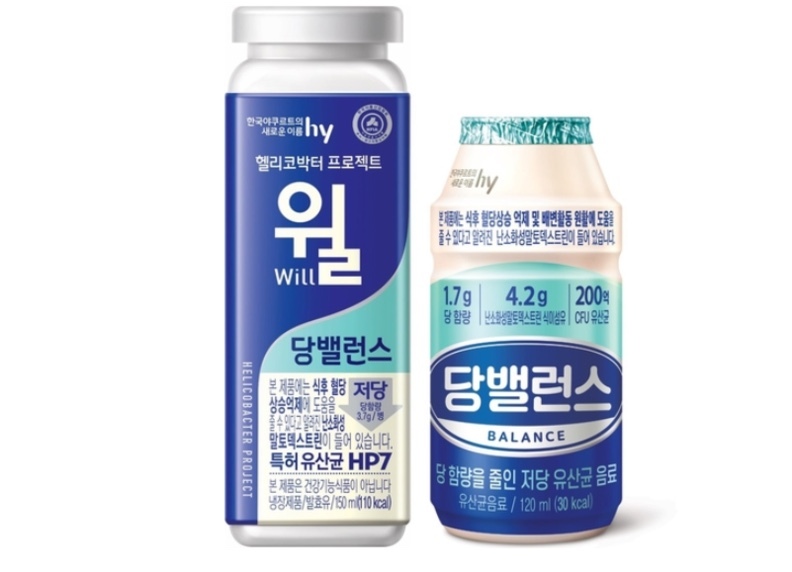
[News Space=Reporter seungwon lee] hy (formerly Korea Yakult) has voluntarily recalled its probiotic product 'Helicobacter Project Will Dangbalun' due to the detection of E. coli in it.
The products with an expiration date of January 21, 2026, and lot numbers of BCAb, BCBb, BCCa, BDAb, BDBb, and BDCa are affected, and the decision was made to halt production and recall them on the 7th, two days after E. coli was confirmed in an internal inspection. Hy stated, "Since door-to-door sales account for 90% of the products, we were able to quickly track them, and we have completed collection of over 99% of the products," but this is a fatal quality defect in a brand that promotes itself as a health functional food, and is increasing consumer distrust.
Background: Despite claims of "unusualness," structural problems are exposed
hy explained that the production process is "automated and untouched by human hands," and that this incident was "very unusual." However, as a probiotics company, the failure to maintain hygiene clearly reveals poor management.
The problematic product, a premium line emphasizing its Helicobacter pylori suppression effect, was recalled just two years after its launch, the first new product in 14 years, significantly damaging brand trust. While consumers can return or exchange the product at a nearby store or customer service center, concerns about potential health risks associated with the product already in circulation are growing.
Repeated Controversy: A History of Quality Blackouts Since Past Lactic Acid Bacteria Standards Were Not Met
This isn't the first time Hy has faced quality issues. Since its founding, it has faced criticism for selling products with lactobacillus content below government standards, leading to criticism that "most commercially available lactobacillus beverages fall short of standards." Furthermore, the excessive sugar content in Yakult's ingredients has tarnished its image as a "health drink."
Recently, amid management controversies such as the forced payment of a 12.5 billion won dividend despite a net loss of 56.4 billion won, an industrial accident that resulted in a fatal accident occurred at the Birak factory, a subsidiary, raising questions about the overall safety management system.
This history suggests that hy has neglected external certification or transparent auditing systems while relying solely on 'self-inspection', and the E. coli detection appears to be an extension of systemic vulnerabilities rather than an accidental mistake.


























 인스타그램
인스타그램
 유튜브
유튜브
 틱톡
틱톡
 실시간 뉴스
 네이버블로그
 네이버클립
네이버클립